 Posted by
 DISCLAIMER: This article contains heavy spoilers for Clair Obscur: Expedition 33. I highly recommend playing the game before you read this, but I’m not your dad so all I can say is read at your own risk.
TRIGGER WARNING: This article discusses death of a family member and the grief that comes with it so keep that in mind when deciding to read this. It also briefly discusses suicide.
DISCLAIMER: While I have finished Expedition 33, I did not do all of the optional stuff in Act 3, so it is possible that there is context I’ve missed. This article is based on evidence from everything I did experience, which is most of the game, and some extra reading from the wiki.
Clair Obscur: Expedition 33 affected me like few games have. I especially loved the ending, which brought all of its major themes together in a way that made me really think like few other games I’ve played have. The choice at the end was so interesting, and I pondered the implications for days afterwards. Then, I remembered a post I’d seen on Bluesky by YouTube video essayist Dan Olson. I’m a fan of his, and I obviously bear him no ill will, but I found it rather surprising. And scrolling through the replies was even more puzzling.
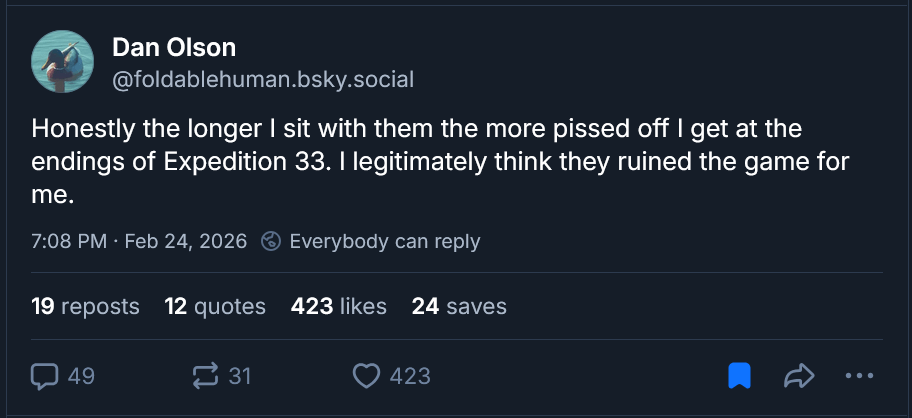
NOTE: I’ve included the hyperlink to let you scroll through the responses yourself. Do not harass anyone in that thread. This article may be disagreeing with most of them, but that doesn’t mean you should call them names.
A complaint I saw a fair bit that the ending is bad because it removes agency from the player characters by boiling the results of their choices throughout the game down to one of two options: continue existing purely at the whim of a dead child and his sister so she can have a life, or disappear because it was time to let go of the last piece of that child and for his sister to go home. People felt surprised by it, disappointed by it, and even betrayed by it. It made them feel like none of the choices they made mattered, and that the characters the story is ostensibly about have no agency in deciding their ultimate fate. I can see why they would feel that way, as that is under normal circumstances a pretty unsatisfying way for a video game to end. But I would push back on calling it a bad ending. In fact, I think none of your choices mattering is a central theme of the game, and this ending is the culmination of that theme.
In this world, there’s a seemingly all-powerful entity called The Paintress. Every year she wipes out everyone of a certain age, and the number decreases by one every year until everyone is gone. This is the central conflict for every human character in this world: barring accidents, they know the exact date that they and everyone around them is going to die. Every choice they make in their lives is defined by it, whether they work to maintain the city they call home, or train as Expeditioners.
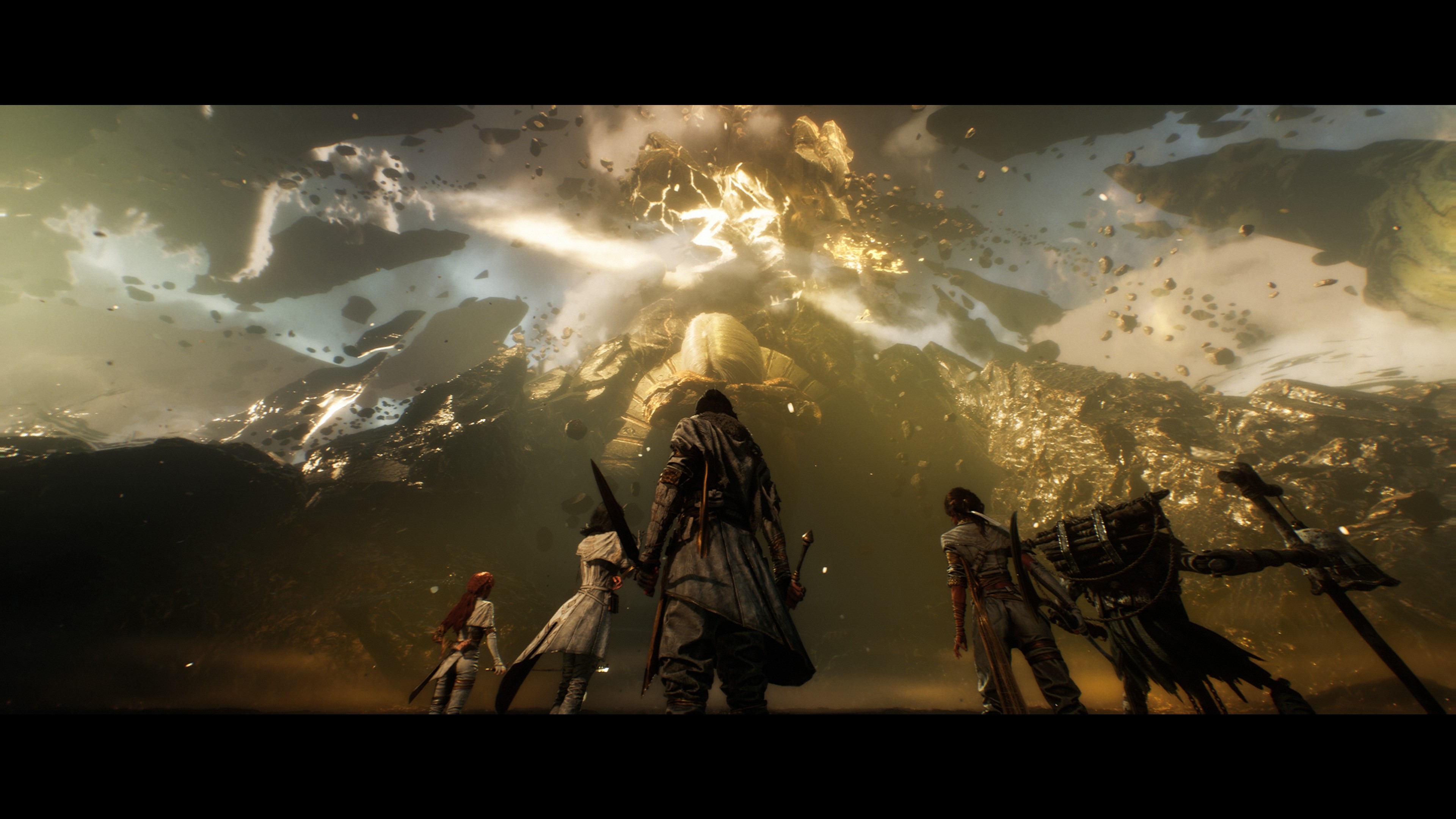
First, let’s talk about Gustave. In the marketing and the beginning of the game, he is positioned as the central protagonist of Clair Obscur: Expedition 33. You play as him in the prologue, he’s voiced by a reasonably big name in Charlie Cox, and it’s through his eyes that you experience the emotional effects of the Gommage for the first time when Sophie is taken. But then at the end of Act 1, he dies, and he doesn’t come back. All of the work his character did to prepare himself for the terrors of the Continent has gone up in smoke because someone infinitely more powerful than him showed up and killed him. But is it wasted effort on the game’s part? I would say it wasn’t, because without making it seem like Gustave and his choices mattered, this moment would not be as emotionally effective for the player or the other characters. His death at the hands of an at that point bordering eldritch power in Renoir haunts the game for Act 2 and becomes a central part of the other characters’ motivations to keep going.
At the same time, the game introduces its new protagonist: Verso. He saves the remaining Expeditioners from Renoir and basically takes up the mantle as leader and guide. He knows the Continent well, being a survivor of Expedition 00 who can’t seem to die no matter what he does and whatever choices he makes. He’s drifted across the Continent for years now, occasionally joining up with other Expeditions but failing every time.
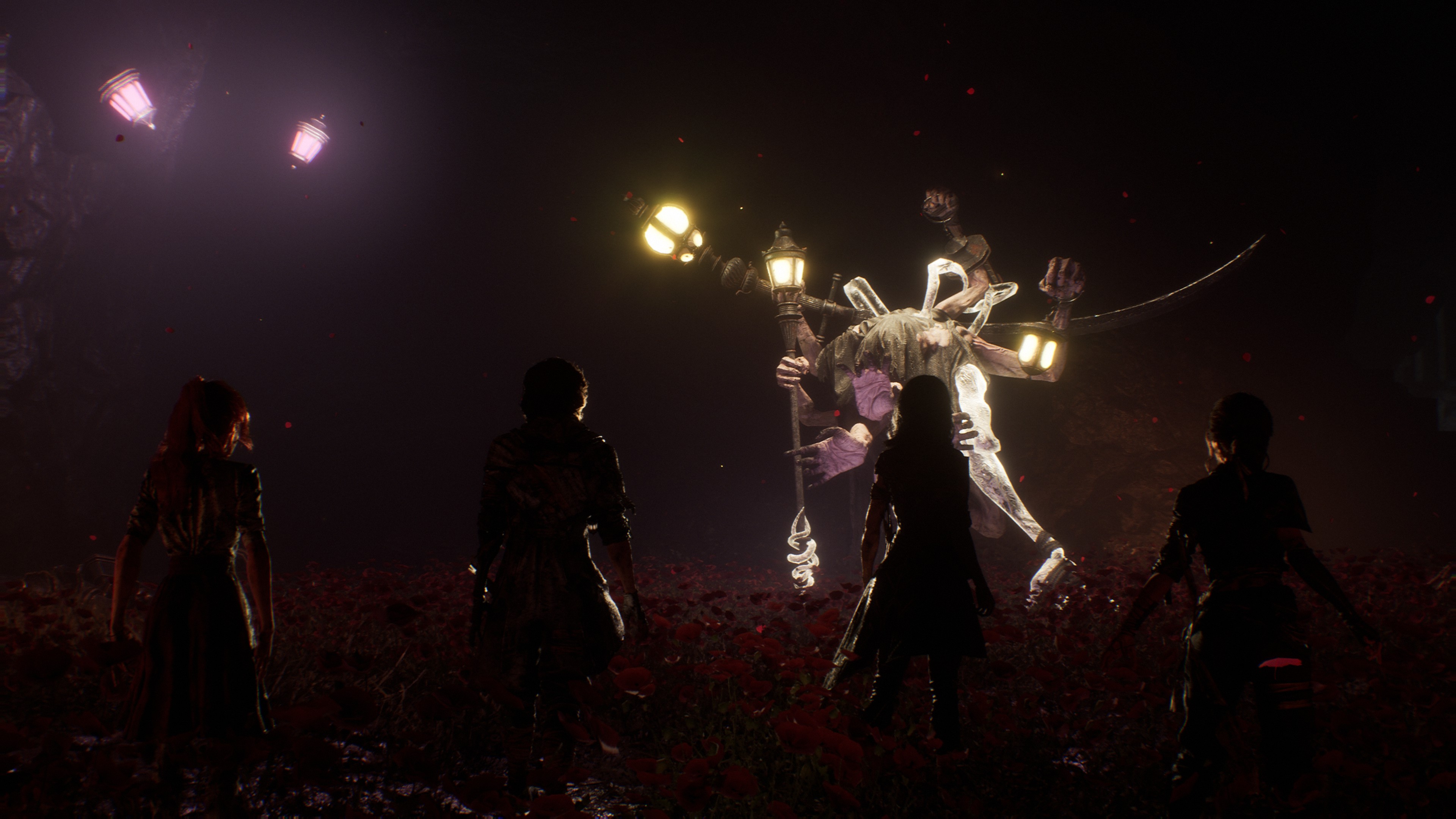
The other remaining Expeditioners Lune and Sciel have their own histories with their choices and free will not mattering. Lune’s parents were adamant that she continue their research work into the effects and powers of Chroma, as she was the only one of her siblings who showed interest or aptitude for the field. And Sciel tried to do the ultimate expression of agency: commit suicide well before she was supposed to die from the Gommage. But even that was denied her, as another extremely powerful entity swooped in to save her life and bring her back to the docks on Lumiere.
You even see this theme repeated in the non-human characters. In a brilliant bit of verisimilitude, the normal Nevron enemies the Expeditioners kill on their way to the Paintress come back every time they rest, meaning that they can’t even affect the most numerous threats on the Continent with their actions. The friendly paintbrush-themed creatures known as Gestrals don’t get to die either. Instead, they are reborn in the Sacred River, but every time they do they lose a part of themselves like memories or aspects of their personality. Their body and name might be the same, but the essence of who they are is altered forever by not being able to let go.
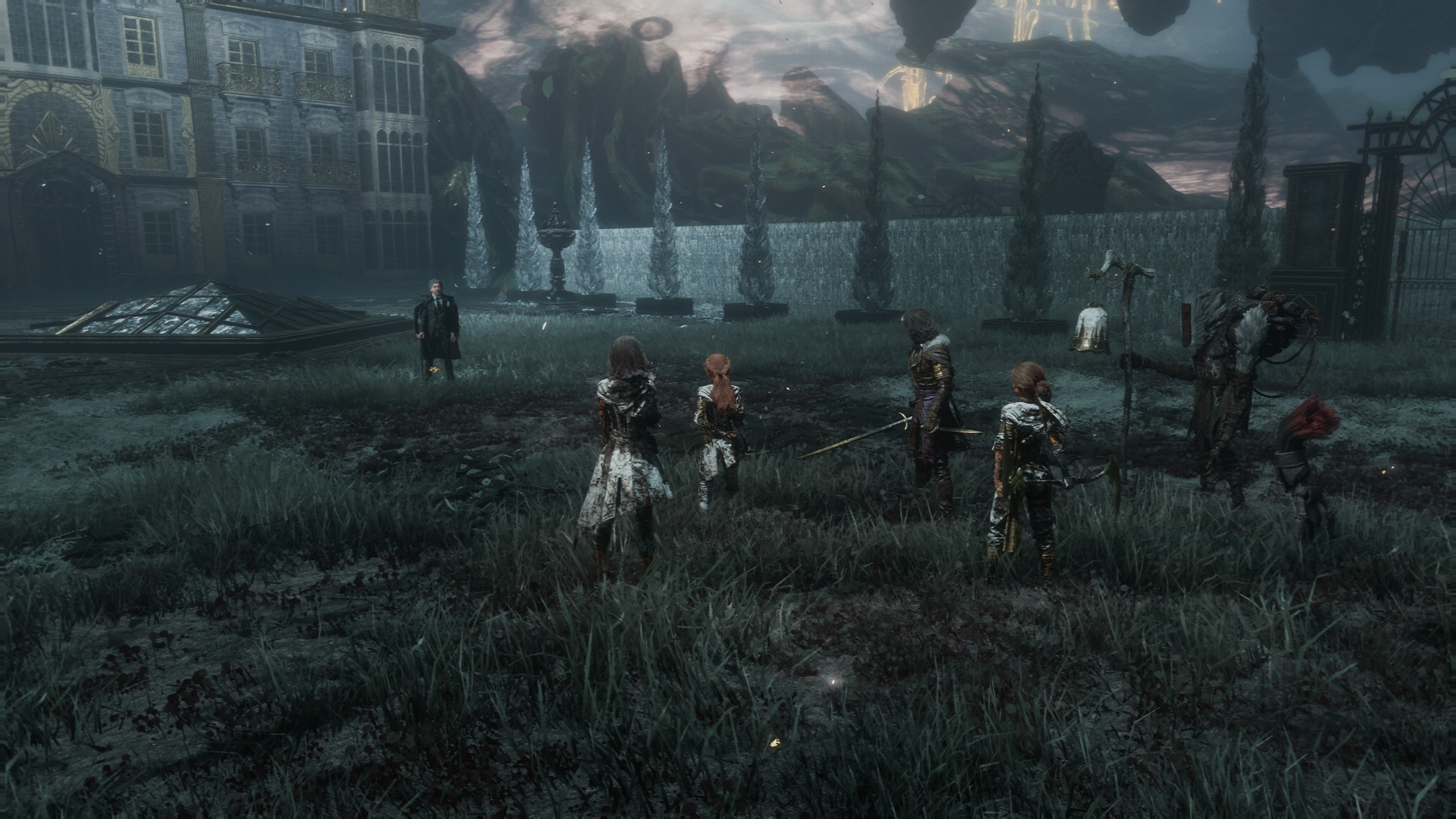
But when Expedition 33 actually succeeds in killing the Paintress at the end of Act 2, it’s revealed that she was actually the only thing holding back Renoir’s attempt to Gommage everyone all at once, and that the numbers were a warning to enjoy the time they had left. So every Expedition who knew they would probably fail but leave behind information or tools to get the next one closer to success, ultimately didn’t matter either. If anything, they just got more people killed, be it on the Continent or due to the final Gommage. And Expedition 33’s choices regarding the Paintress didn’t matter either. Verso knew her true nature, but went along with them anyway because he was supposed to keep Maelle safe. He knew all along what would happen if they succeeded; that their attempt to save the future would instead doom every human in the world. It was his plan all along, because he knows his true nature as well, and wants so badly to die. But again, if the game hadn’t spent all that time building up the idea of defeating the Paintress, the reveal of the truth would not have been nearly as effective, just like the end of Act 1. They essentially played the same trick twice, and it worked both times because the writing leading up to those moments is carefully and cleverly constructed to make them as impactful as they ended up being.
Then add to this the other major revelations at the end of Act 2: that this world is an artificial creation by the actual, now-dead, Verso from the real world where more of these Canvas worlds are can be made by people with Paintress powers, that Maelle is actually Alicia—who got severely injured in the fire that killed real-world-Verso and can hardly speak— and the Paintress is her mother Aline who has lost herself to this Canvas world because she can’t let go of the last remnants of her dead son.
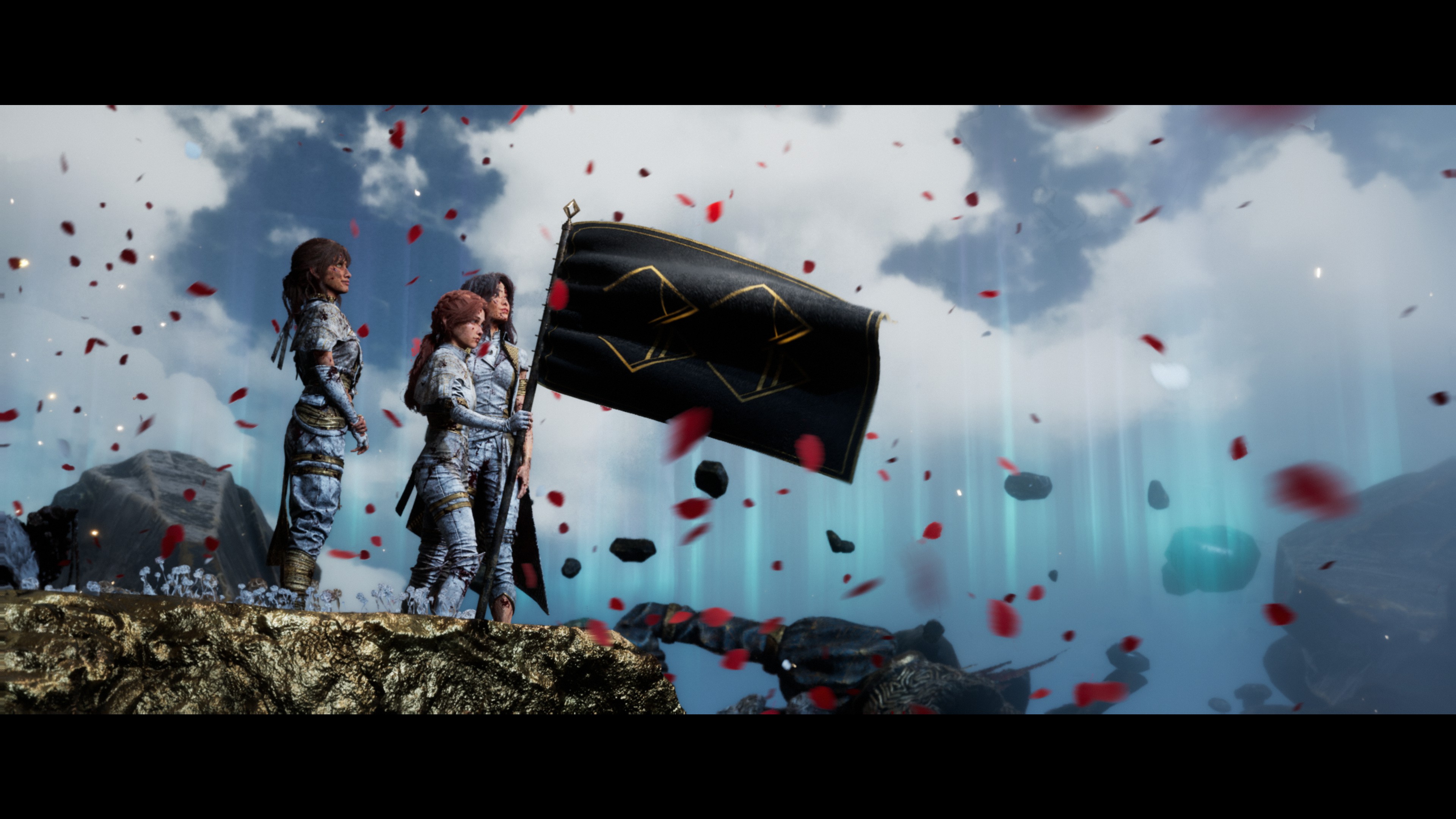
I don’t believe that these kinds of extreme perspective-altering revelations are done maliciously. One complaint I saw a lot is that people felt like the writers were taunting them with how clever they were being by tricking the player. But I don’t think that’s entirely fair. I think the writers took full advantage of the interactive nature of video games to give the player that feeling of agency that the characters never really had. You make all of the choices for mechanical progression and dialogue paths. This made you more invested in what happens to the characters. But they all end up at the same spot at the end. I see it as a deliberate artistic decision to reinforce the game’s central themes. The developers aren’t laughing at you; they’re trying to make you feel something. They needed you to build a heart so they could break it. It’s not bad design or bad writing. It’s what the game is about.
Clair Obscur: Expedition 33 is about grief.
Grief will make you feel like you have no control, and the thing that causes it will feel like it comes out of nowhere. You can use the anger to push forward for a while but ultimately you have to let go. One ending shows what happens when you don’t, and the other shows what happens when you do.
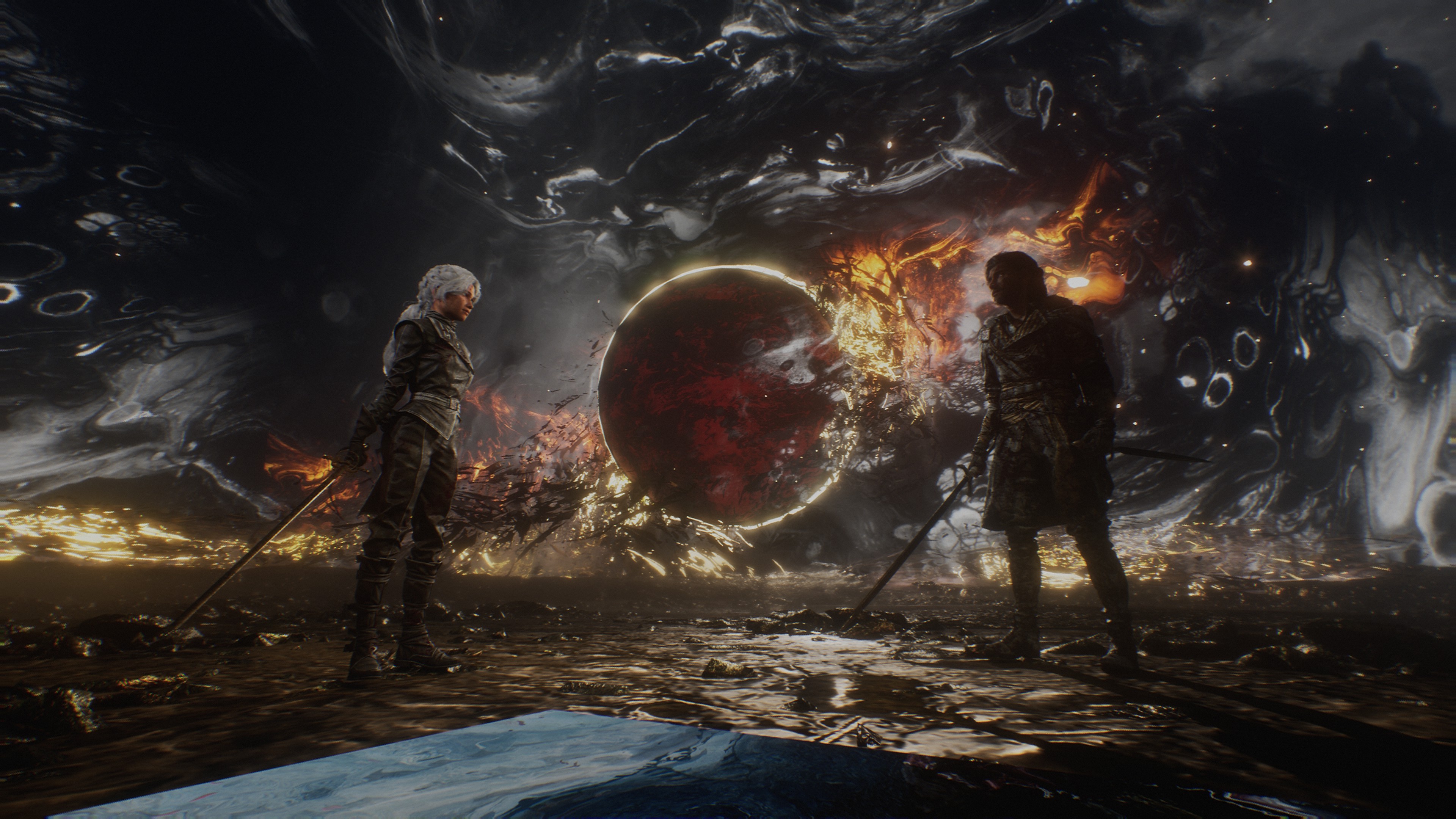
The ending of the game presents you with a choice: either side with Verso and allow the Canvas world to be destroyed so Aline and Maelle can let go and move on, or side with Maelle and let her continue in the Canvas, potentially indefinitely. Neither can really be described as “good.” although I would argue that the former is framed as the superior option by the game with the way they’re lit. Siding with Verso gives you a bittersweet but cathartic ending full of light, whereas Maelle’s side is dark and nervous. Because as difficult as grief is to deal with, at a certain point you do have to move on. It will stay with you forever regardless of what you do, but you can’t let it consume you. The people and relationships you loved will always be a part of you, but you grow around them.
This is a world and story defined by grief. Grief will make you feel like it’s taken every sense of control from you, and that’s often exactly correct. People you love will die, and you can’t do anything about it. It’s one of the worst parts of life, and it can be very tempting to try finding a place where you can exert some kind of control. That’s what siding with Maelle does. She brings back everyone who died, including Gustave. But as she sits down to watch Verso’s concert, which he’s clearly hesitant to perform, you see her face change with the same corruption that turned Aline into The Paintress. She’s losing herself to the Canvas because she can’t let go. It’s going to destroy her, and potentially make everything worse for everyone in the Canvas world again. Neither choice wraps up everything in a neat bow. But that’s the point, right? Life never works out the way you want it, especially when you’re dealing with grief and loss. It’s one of the hardest things to experience, and I commend Sandfall Interactive for sticking to their guns and showing that in these endings.

